Short legs, big ears and a face that somehow always looks a little too friendly: many people first discover the Pembroke Welsh Corgi because of its appearance.
Before deciding on a puppy, however, there is a much more important question:
Does a Corgi really fit my lifestyle?
In short: a Pembroke can be a great match for people who want an intelligent, people-oriented and moderately active dog and who are willing to invest time in training and mental stimulation. They may be less suitable for extreme endurance athletes, very long daily periods alone or households that want to avoid dog hair as much as possible.
Despite their manageable size, Pembrokes are not typical small companion dogs. They were originally bred as herding and cattle-driving dogs and still tend to bring traits such as attentiveness, intelligence, independence and a certain level of watchfulness into everyday life.
We have lived with Corgis for several years and have learned one thing in particular: the breed has typical characteristics, but every dog is still an individual.
That is why we want to combine common breed traits with our own experiences rather than present a rigid breed profile.
A lot of dog on short legs
One of the most common things you hear about Corgis is that they are stubborn. That reputation is not completely unfounded. At the same time, people are often surprised by how calm and well behaved our dogs can be in everyday life.
We have left restaurants more than once and heard: “Oh, there was a dog with you? We didn’t even notice.”
Of course, that is not automatically a Corgi trait. Training and habituation play a major role. What we do notice very clearly, however, is this: they learn quickly. And they learn just as quickly which rules actually apply.
Koda was very affectionate and strongly focused on his person, but he could also be remarkably persistent. Coco is more energetic and was noticeably more independent, especially during adolescence.
For us, the best approach is a combination of clear rules and consistency without unnecessary harshness.
A Corgi can absolutely work as a first dog in our view. You should, however, genuinely enjoy working on training. Anyone who assumes that a small dog will automatically just fit in without much guidance may be surprised by a Pembroke.
Sometimes you can really see the herding dog
Their background as herding and cattle-driving dogs is more than just breed history on paper.
We already noticed this with Koda as a puppy. With a close family member, he occasionally tried to nip at the back of the calves while they were walking. This kind of behaviour makes sense when you consider the breed’s original work as a cattle dog. Of course, he quickly learned that people were not there to be herded.
We also noticed on group walks that Koda would repeatedly check whether everyone was still together.
And if a Corgi is bored, they may simply invent a job for themselves. In our home that could mean more barking, watching doors, monitoring the garden or following us around until it became obvious that something was expected to happen.
Koda was especially talented at this. Eventually, the typical sound of a parcel scanner was enough to get his attention. Before the doorbell even rang, he already seemed to know that something was about to happen.
Coco, on the other hand, barks far less on her own. Differences like this are exactly why we would be careful with blanket statements such as “Corgis always bark a lot.”
How much exercise does a Corgi need?
The short legs can make a Pembroke look more relaxed than they really are. When our dogs get the zoomies, people are regularly surprised by how fast a Corgi can actually move.
In normal everyday life, our adult dogs get around two hours of exercise a day, mainly through walks. On top of that there is time in the garden, playing and short training sessions.
That is not a fixed target for every Corgi. Age, health, fitness and personality always matter.
With a young dog, we would build up exercise gradually and in an age-appropriate way. Bones, joints and muscles are still developing, so long, repetitive or very intense exercise would not be part of our normal routine at that stage.
Later, a healthy and well-conditioned Pembroke can be surprisingly capable. Even so, we would not compare their physical endurance with that of a taller breed specifically built for long-distance activity.
Active, yes, but with realistic expectations
Koda surprised us more than once while travelling.
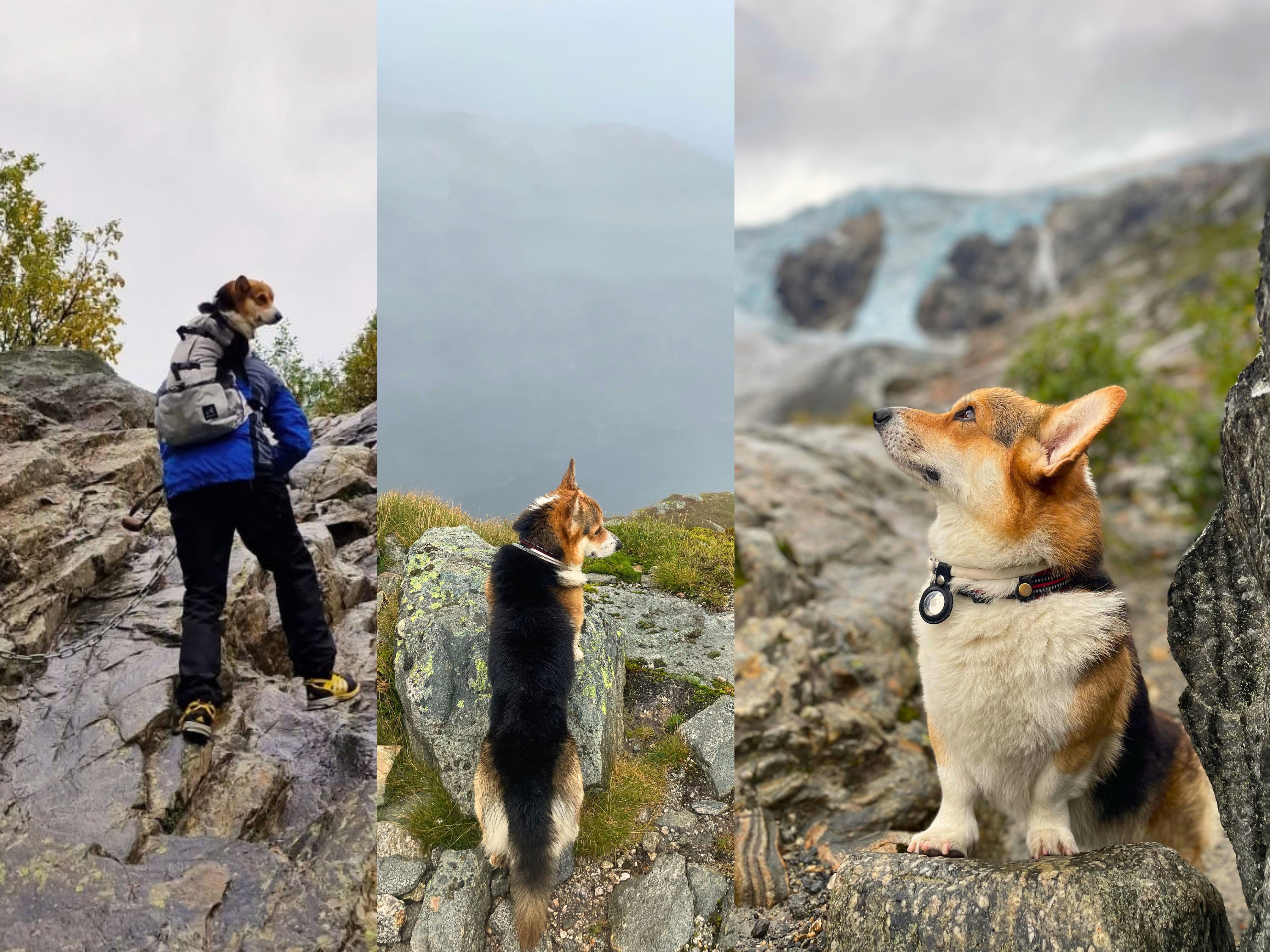
In Norway, we took him on some fairly demanding hikes. The weather was cool, misty and often rainy, and somehow he seemed completely in his element. He walked ahead with great motivation and sometimes looked as if he could go on forever.
At climbing sections, however, independence ended. That was when he went into his backpack and was carried.
That sums up our view of the Corgi quite well: they can be athletic and surprisingly enduring, but you should never forget their anatomy.
I used to enjoy running myself, but I consciously never took Koda jogging with me. Our dogs love short sprints while playing or doing zoomies. Long, steady-distance running is simply not the activity for which I would specifically choose a Pembroke.
Dog sports such as agility can also suit some individuals. For us, controlled training, appropriate physical demands and the condition of the individual dog would always matter more than sporting ambition.
The same applies to hiking. A fit Pembroke can absolutely enjoy beautiful and even longer walks. But if someone regularly plans very long, steep or demanding mountain hikes and is specifically looking for a dog for that lifestyle, a Corgi would not be our first recommendation.
They do not need to be wrapped in cotton wool. You should simply be prepared to adapt pace, duration and difficulty to their build.
Back, muscle condition and body weight matter
A Corgi’s distinctive body shape is not just a visual feature.
Short legs and a comparatively long body mean that we pay particular attention to a healthy weight, regular movement and good general muscle condition.
Core and back exercises can also be part of that. With our puppies, for example, we sometimes use suitable balance elements in a playful way. For targeted conditioning or any health concern, however, we would always adapt exercises to the individual dog and, where appropriate, discuss them with a veterinarian or canine physiotherapist.
We are also fairly careful with stairs. We regularly carry our Corgis when many stairs can easily be avoided. A healthy adult dog does not need to be protected from every single step, but with puppies, young dogs or older dogs we prefer to avoid unnecessary repetitive strain.
Exercise is not everything
Alongside walks, our dogs really enjoy scent games, sniffing and short training sessions.
Koda particularly loved obedience work and show training. Coco is generally a little more active and enjoys more physical activities.
Sometimes a few hidden treats, a short training session or a small problem-solving task can do more than simply adding another walk around the block.
Quieter days are not a problem for us either. When their basic needs are met, our dogs are very good at switching off at home and sleeping for long periods.
Apartment living, working from home and being left alone
A Corgi does not need a large house with a garden. An apartment can be perfectly suitable, and while a garden is convenient, it does not replace walks.
We care more about the actual living conditions. A home with many stairs, permanently slippery floors or a daily routine with very little movement and stimulation would concern us more than the size of the property itself.
Working from home also works very well with our dogs. When they are content, they simply sleep nearby. If they are not, you will usually be reminded fairly clearly that some entertainment would now be appreciated.
Being left alone still has to be learned. Koda could regularly stay home alone for several hours as an adult. Coco found it considerably more difficult as a young dog.
Young, people-oriented dogs can react with stress or unwanted behaviour if alone-time training is poorly introduced. Today, we would make a point of building this up consciously and gradually from the beginning.
Personally, we would not consider a routine where a dog has to stay alone for more than around four hours every single day ideal. An occasional longer day is of course different from a daily pattern.
Corgi Glitter: the shedding is real
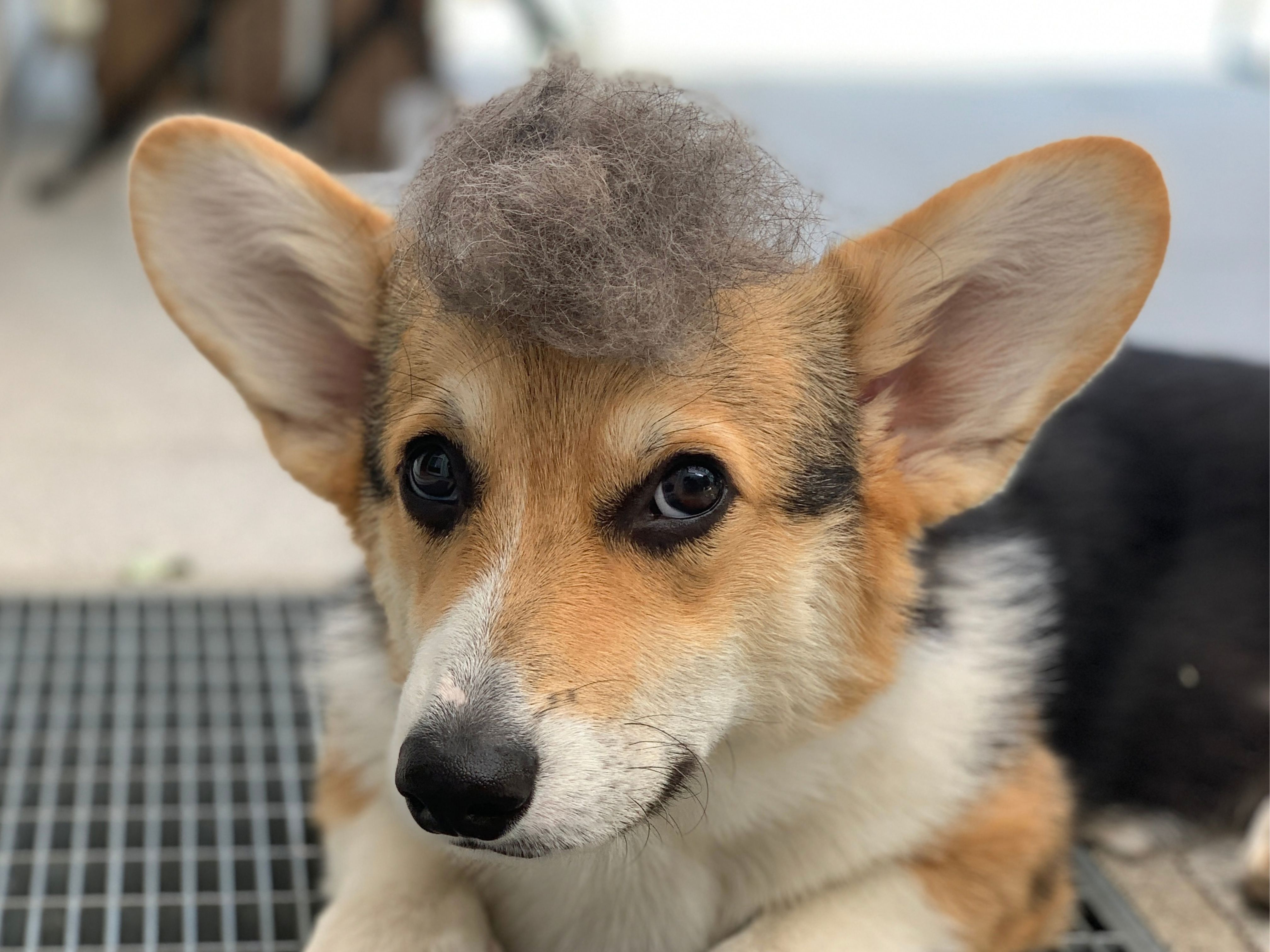
Corgis shed. A lot.
Online, this is often affectionately called “Corgi Glitter.”
Eventually, you will find that glitter everywhere. I have even found dog hair on my office chair at work, even though the dogs have never been there. It simply travelled with me on my clothes.
Black clothing is also a fairly brave choice.
And if you skip vacuuming for a few days, you may see a small tuft of fur rolling across the room. A bit like one of those tumbleweeds in an old Western. Except made of Corgi.
During shedding season, it gets even more noticeable.
If you are very particular about keeping a completely hair-free home, a Pembroke will probably not make you happy.
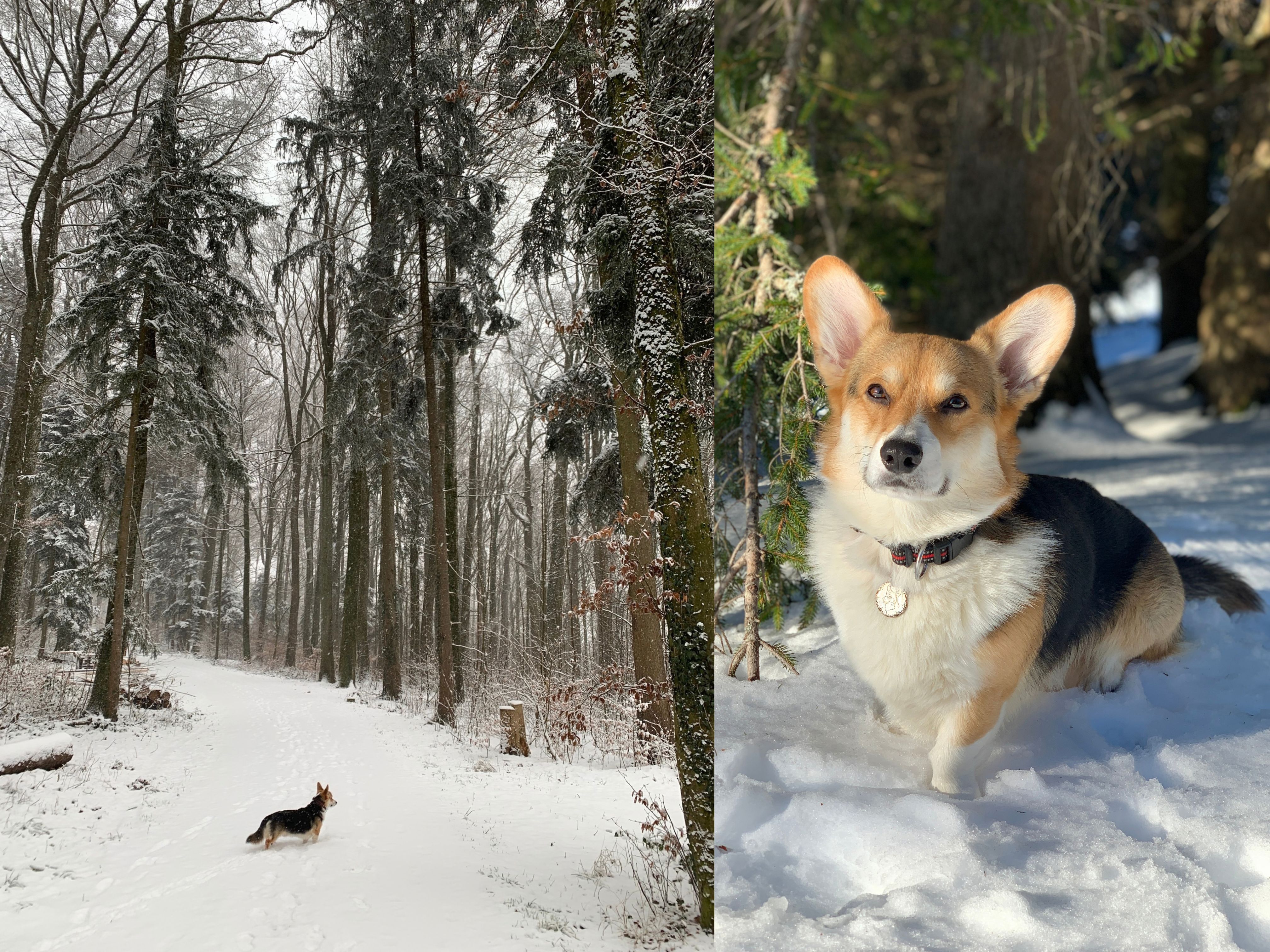
Heat, no. Snow, absolutely.
Our Corgis cope much less well with heat than with cooler weather. In summer, we move longer walks to the cooler parts of the day.
Snow, on the other hand, is a completely different story.
They love it.
They jump through it like little snow hares and bury their noses right into it.
Family dog, yes, but with respect
Pembrokes can be very people-oriented and friendly.
Coco grew up around children and loves interacting with them. Koda’s attitude towards children changed somewhat over the course of his life.
That is why we would never say that every Corgi automatically loves children.
What matters to us is that children also learn to recognise when a dog wants some peace and quiet. Even a very friendly dog should always be allowed to step away.
What we really love about Corgis
With all the things you should think about before getting one, there is of course also the reason why we would choose this breed again.
For us, Corgis have a very special combination of closeness, humour and personality.
When we sit down on the floor, our dogs often come running over wagging their tails, lie down next to us or directly in our laps and simply want to be stroked. Then they sigh contentedly and settle in for a cuddle.
They are very people-oriented and like to know what is going on around them. At the same time, when everyday life suits them, they are perfectly capable of switching off and simply sleeping nearby.
And they are incredibly expressive.
Sometimes they lie twisted on their backs in such strange positions that the whole dog looks like a question mark. Then there is the broad Corgi grin, the big ears, the very direct look and even different levels of barking. Alongside a normal bark, ours also have that quiet half “woof” that seems to mean nothing more than: I noticed that.
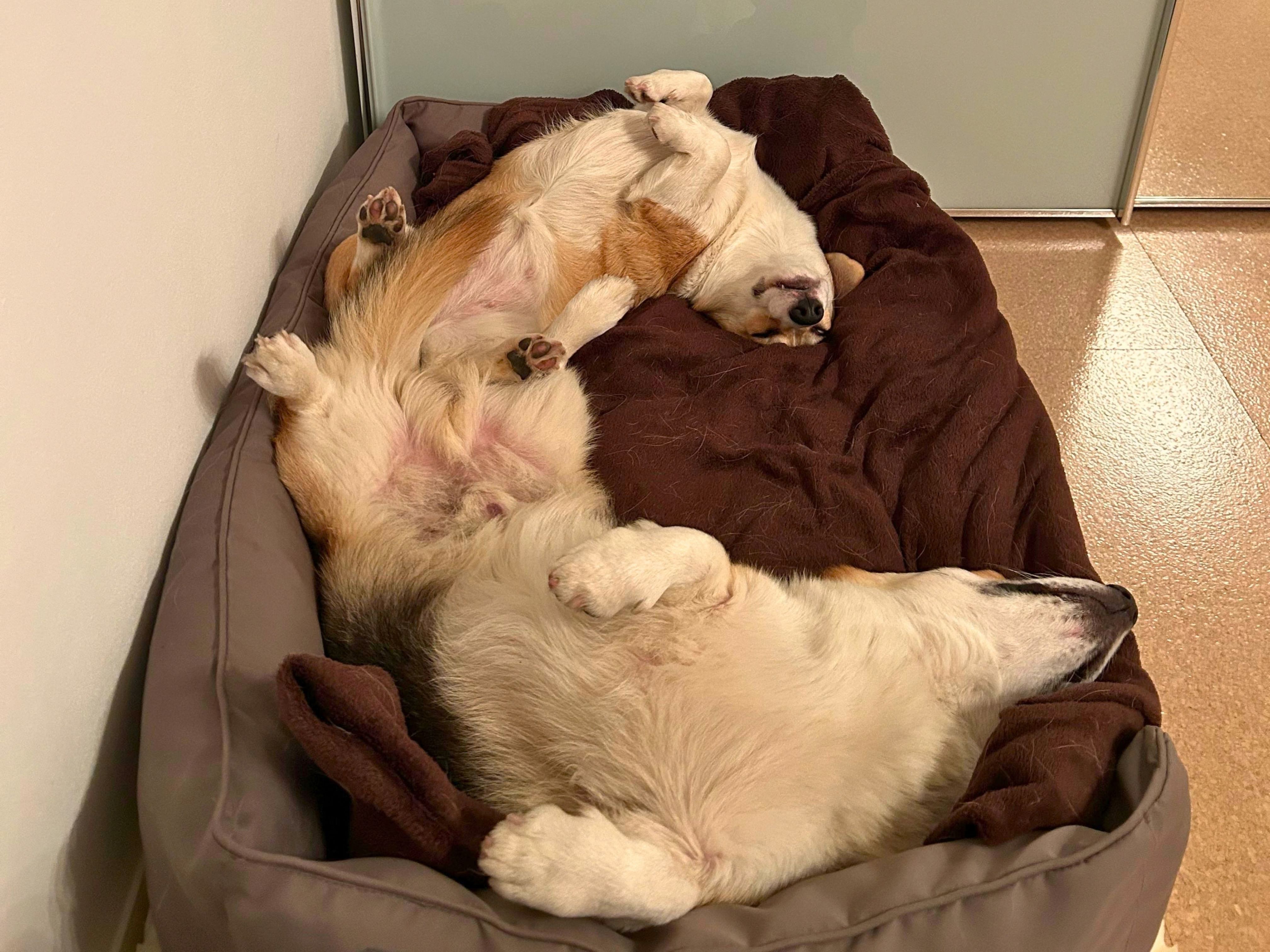
What we especially love is this combination of funny and serious.
A Corgi can be highly motivated outside, work, run or learn something new and then be completely content cuddling next to you a short time later.
They give an incredible amount of affection without losing their own personality. Quite the opposite: sometimes it really feels as if you are having a small discussion with them.
That is exactly what makes them so lovable to us.
Who is a Pembroke Welsh Corgi a good match for?
In our view, a Pembroke is a good match for people who enjoy going for walks, like doing short training or enrichment sessions and genuinely want to include their dog in everyday life.
A certain amount of consistency is important too. A Corgi does not need harsh training, but clear rules that still apply tomorrow. At the same time, it is important to accept that while a Pembroke is active, they do not need to be a dog for constant athletic performance.
Whether you are single, a couple or a family, a garden is nice but not essential. What matters more is having enough time for exercise, training, mental stimulation, closeness and shared downtime.
Who might be better suited to a different breed?
A Corgi would not be our first choice for someone who:
- wants an almost hair-free and extremely clean home
- is specifically looking for a dog for regular intensive jogging or very long, demanding hikes
- is away from home for long periods almost every working day without suitable care for the dog
- wants to invest as little time as possible in training and mental stimulation
- has mainly fallen in love with the breed because of its appearance or social media
A lot of affection does not replace training.
Corgis are affectionate and cuddly, but in our experience they still benefit from clear boundaries and a daily routine in which dog and human learn how to live well together.
So, is a Corgi right for me?
For us, the Pembroke Welsh Corgi is above all one thing:
a surprising amount of dog in a fairly small body.
They are more active, faster and more willing to work than their short legs might suggest. At the same time, they are not a breed whose distinctive build should simply be ignored.
They can be well trained, calm and very easy to integrate into everyday life. They can also be watchful, independent and remarkably inventive when bored.
And then there is the hair. A lot of hair.
But if you are looking for a people-oriented, intelligent and characterful dog, enjoy being outdoors and equally enjoy relaxing together at home, the Pembroke may be exactly the right balance.
For us, it is precisely this combination of closeness, humour, activity and a mind of their own that makes Corgis so special.