CAC, CACIB, BOB, BOS. If you look at a dog show catalogue or the show results of a pedigree dog for the first time, most of these abbreviations probably mean very little.
The basic principle of a dog show, however, is actually quite simple.
In English-speaking countries, the term “conformation show” is commonly used. In other countries, you may also come across terms such as breed show or morphology show. The idea is essentially the same: a qualified judge evaluates how closely a dog conforms to the official standard of its breed.
Dog shows have been part of life with our Corgis for several years now. For us, they are about much more than simply collecting titles.
What is actually judged at a dog show?
Every breed recognised by the FCI has its own official breed standard.
This describes the characteristics considered typical for the breed, including body structure and proportions, head, movement, coat, size and temperament.
For the Welsh Corgi Pembroke, this is the official FCI Breed Standard No. 39. The Pembroke belongs to FCI Group 1, Sheepdogs and Cattle Dogs.
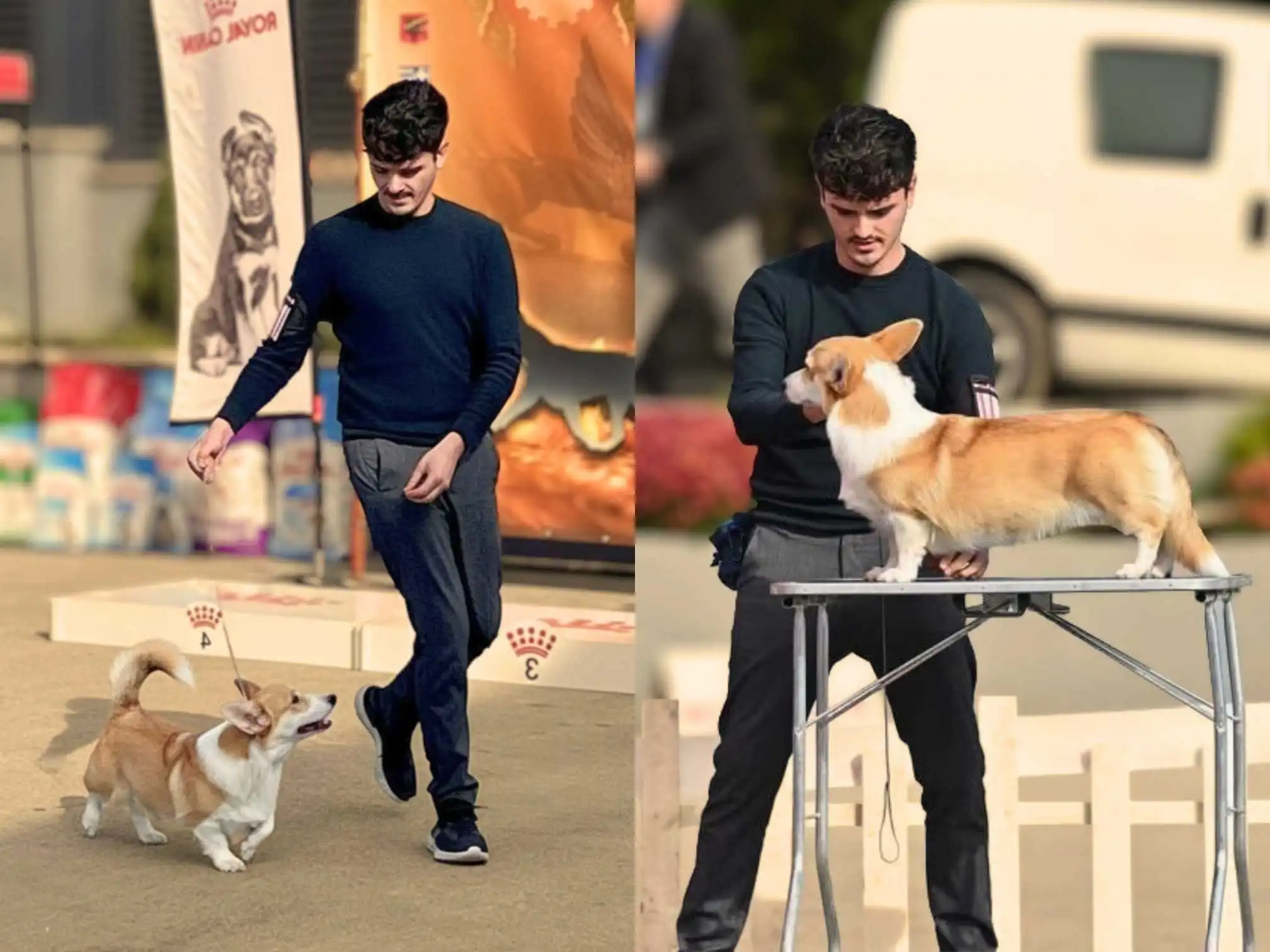
In the ring, the dog is assessed both while standing and while moving. Depending on the breed, the judge will look at aspects such as structure, dentition, movement and other breed-specific characteristics.
The judge is therefore not simply choosing the dog they personally find the prettiest. The breed standard is always the basis of the evaluation. Within that framework, however, the judge still has to decide how they weigh individual strengths, weaknesses and the overall impression of the dog.
Judges complete specific training and are approved to judge particular breeds or FCI groups. Not every judge is therefore automatically authorised to judge every breed. The German Kennel Club, the VDH, for example, maintains a list of judges and their breed approvals.
From the class to CAC and CACIB
Dogs and bitches are generally judged separately. They are also entered into different classes depending on their age and, in some cases, titles they have already earned.
These can include the Baby and Puppy classes, followed later by Junior, Intermediate, Open, Champion and Veteran classes.
The judge first evaluates the dogs within their class and awards a quality grade. For adult dogs, examples include “Excellent”, “Very Good” and “Good”. A dog can also receive a lower grade or be disqualified where appropriate, although this is relatively uncommon in normal show practice.
The best dogs in each class are then placed.
An important point for beginners is that the quality grade and the placing are two separate things. For example, V1 in a German result means the dog received the grade “Excellent” and placed first in its class. V2 also means “Excellent”, but with second place. In the same way, there can be results such as SG1 or SG2, with SG standing for “Sehr Gut”, or “Very Good”.
Depending on the result, the judge may also award a championship certificate, such as a CAC or CACIB.
CAC stands for Certificat d'Aptitude au Championnat and, put simply, is a certificate that counts towards a national or kennel-club championship title.
CACIB stands for Certificat d'Aptitude au Championnat International de Beauté and is an international FCI championship certificate.
A CAC or CACIB therefore does not make a dog a champion immediately. Depending on the country and title, a dog must collect a certain number of certificates under the relevant conditions. This is how dogs can eventually earn national championship titles or international FCI champion titles.
There are also separate certificates and titles for Juniors and Veterans, as well as special winner titles awarded at particular shows. The exact rules vary between countries and organisers and quickly become more detailed than most people need for a basic understanding of dog shows.
Anyone interested in the full regulations can find the current VDH championship rules and the FCI information on international championship titles.
How I became involved in the show world
My first contact with dog shows actually goes back much further. I already had my first glimpses into this world as a child.
I became actively involved in 2021 with Koda.
Since then, we have shown our dogs in five different countries. That is one of the things I enjoy most about it: meeting different judges, experiencing different shows and seeing how the atmosphere can vary slightly from country to country.
Of course, a good placing or a championship certificate is always something to be happy about. But I find the opinion of a qualified judge on our own dogs and the conversations with other breeders and owners just as interesting.
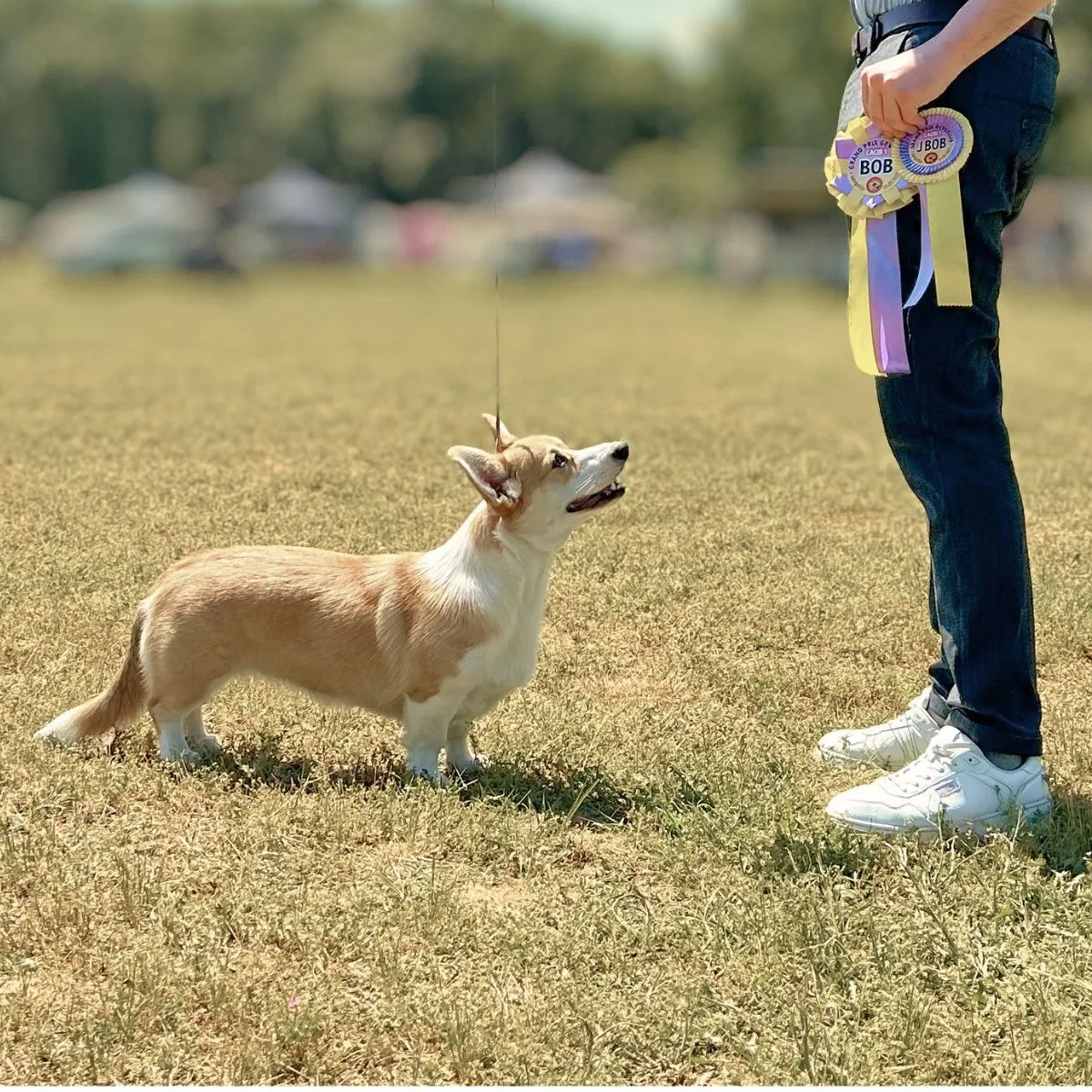
BOB, BOS and the road to Best in Show
Once the class judging is complete, the competition can continue.
The appropriately qualified dogs of the breed are compared with each other. This is where titles such as Best of Breed (BOB) and Best of Opposite Sex (BOS) come into play.
BOB simply means the dog chosen as the best representative of the breed on that day. BOS is the best dog of the opposite sex.
There are also separate competitions for younger and older dogs, such as Best Puppy, Best Junior and Best Veteran.
The BOB winner then represents the breed in the competition for its respective FCI group. The Welsh Corgi Pembroke belongs to FCI Group 1.
If a dog wins at group level, it becomes Best in Group (BIG). The group winners then compete in the main ring, where the Best in Show (BIS) is selected.
Put very simply, the path can therefore go from: class → breed → FCI group → Best in Show
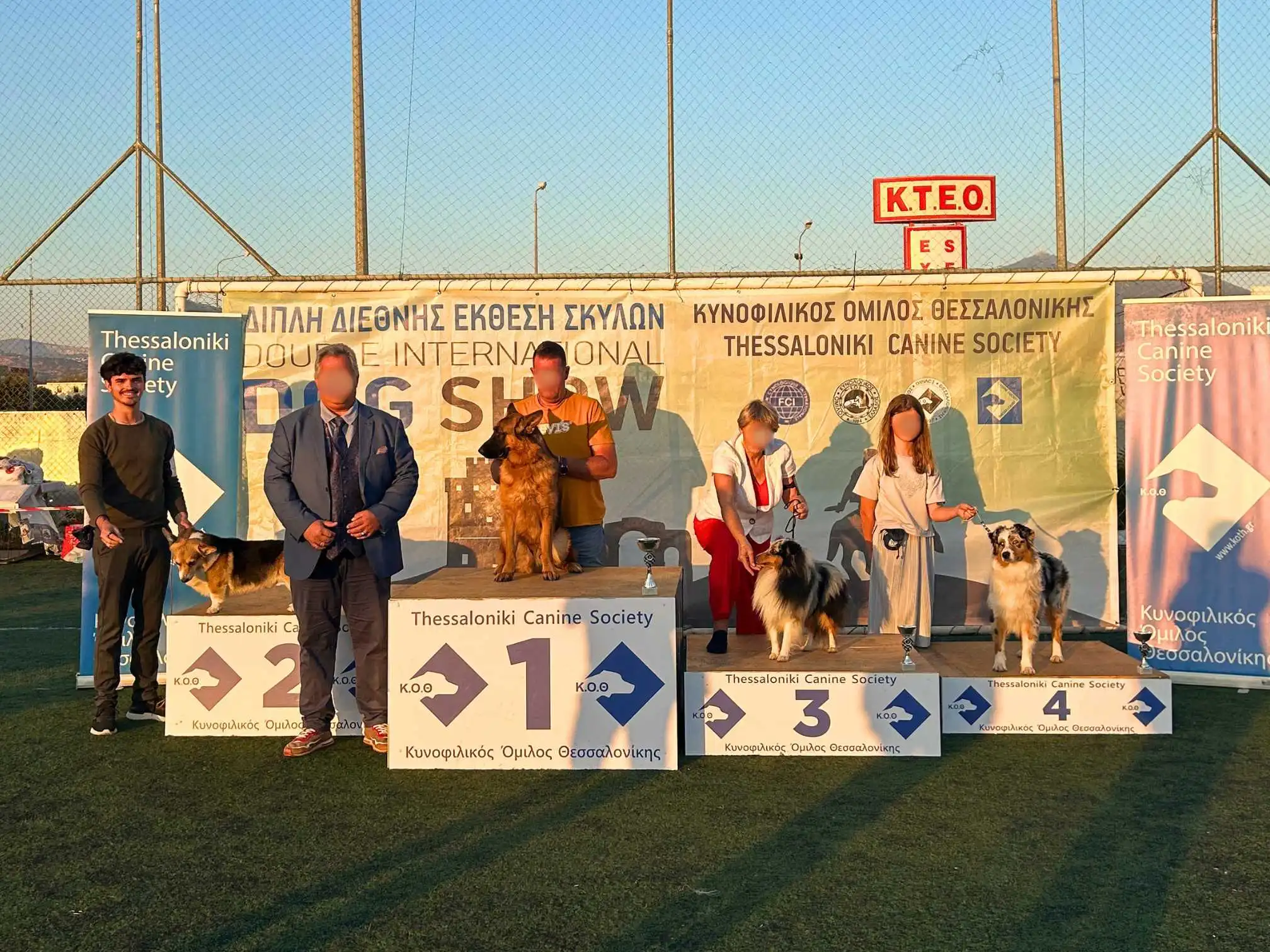
One particularly memorable moment for us was an international show in Thessaloniki with Koda. After winning within the Pembrokes, he moved on to the group competition and eventually achieved second place in Best in Group.
Because the group competition brings together the best representatives of several different breeds, this is still one of our favourite show achievements.
Koda and Coco have also stood together in the ring competing for Best of Breed at international shows. When both of your own dogs are suddenly among those being considered for the breed win, it is a very special situation.
Dog shows and breeding often go hand in hand
Breed shows also play another role in organised pedigree dog breeding.
Depending on the breed and breeding organisation, certain show results may form part of the requirements for breeding approval. This means that a future breeding dog is not only assessed through the required health examinations, but is also evaluated by qualified judges for its appearance and conformity to the breed standard.
In our case, within the Club für Britische Hütehunde (CfBrH), two appropriate show evaluations are among the requirements considered as part of the breeding approval process.
The exact requirements vary depending on the breed and organisation. For our breeding programme, the current breeding and approval regulations of the CfBrH apply.
Seeing the other side of the ring
By now, I no longer know dog shows only from the exhibitor's side.
In two countries, I have already worked as a ring steward or ring secretary for the judging of more than 250 dogs.
The dogs are of course judged exclusively by the judge. As a ring secretary or steward, you support the organisation of the ring, record results and help ensure that the individual classes run smoothly.
I also support the annual show of the Württemberg regional group of the Club für Britische Hütehunde as a ring steward or ring secretary.
That gives you a very different perspective on a show. You see many different dogs and breeds and work directly alongside judges. Because of that, I could even imagine training as a dog show judge myself at some point in the future.
When a dog is just a little too happy in the ring
Koda and Coco have always had a very positive association with dog shows. The attention, working together and, of course, the treats that come with it mean that both of them have sometimes moved through the ring looking especially happy and confident.
That has even led to a few amusing judge comments.
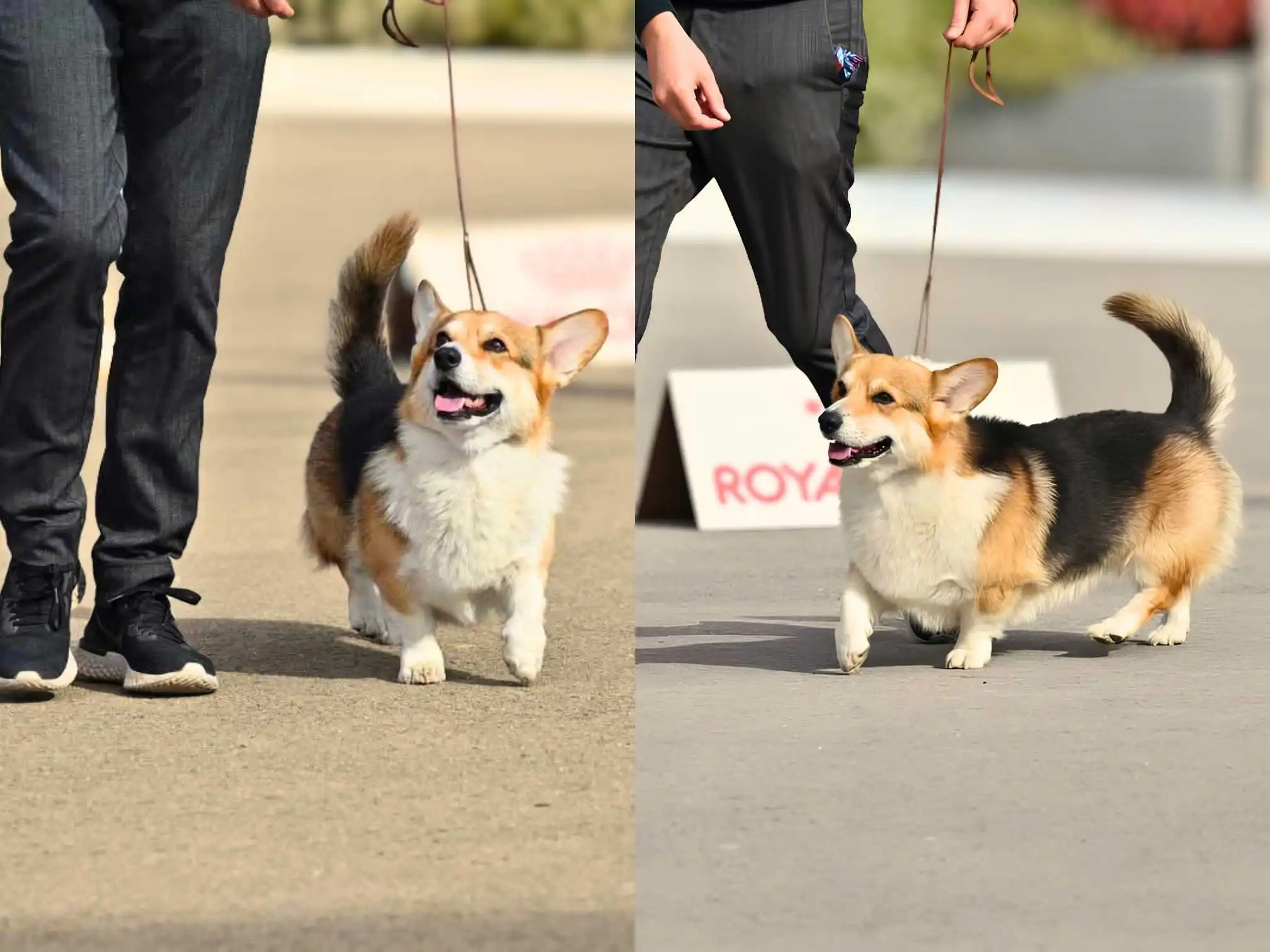
Both have occasionally been criticised for carrying their tails a little too happily or proudly.
For someone unfamiliar with dog shows, that probably sounds slightly strange. In the ring, some judges prefer to see a more neutral tail carriage while the dog is moving. A particularly excited or motivated dog may naturally carry its tail higher.
For us, comments like that sometimes almost felt like a small compliment. They were simply having a very good time in the ring.
The show world is smaller than you might think
When I think back on our previous shows, it is not only the mostly positive judge reports that stay with me, but especially the encounters and individual experiences along the way.
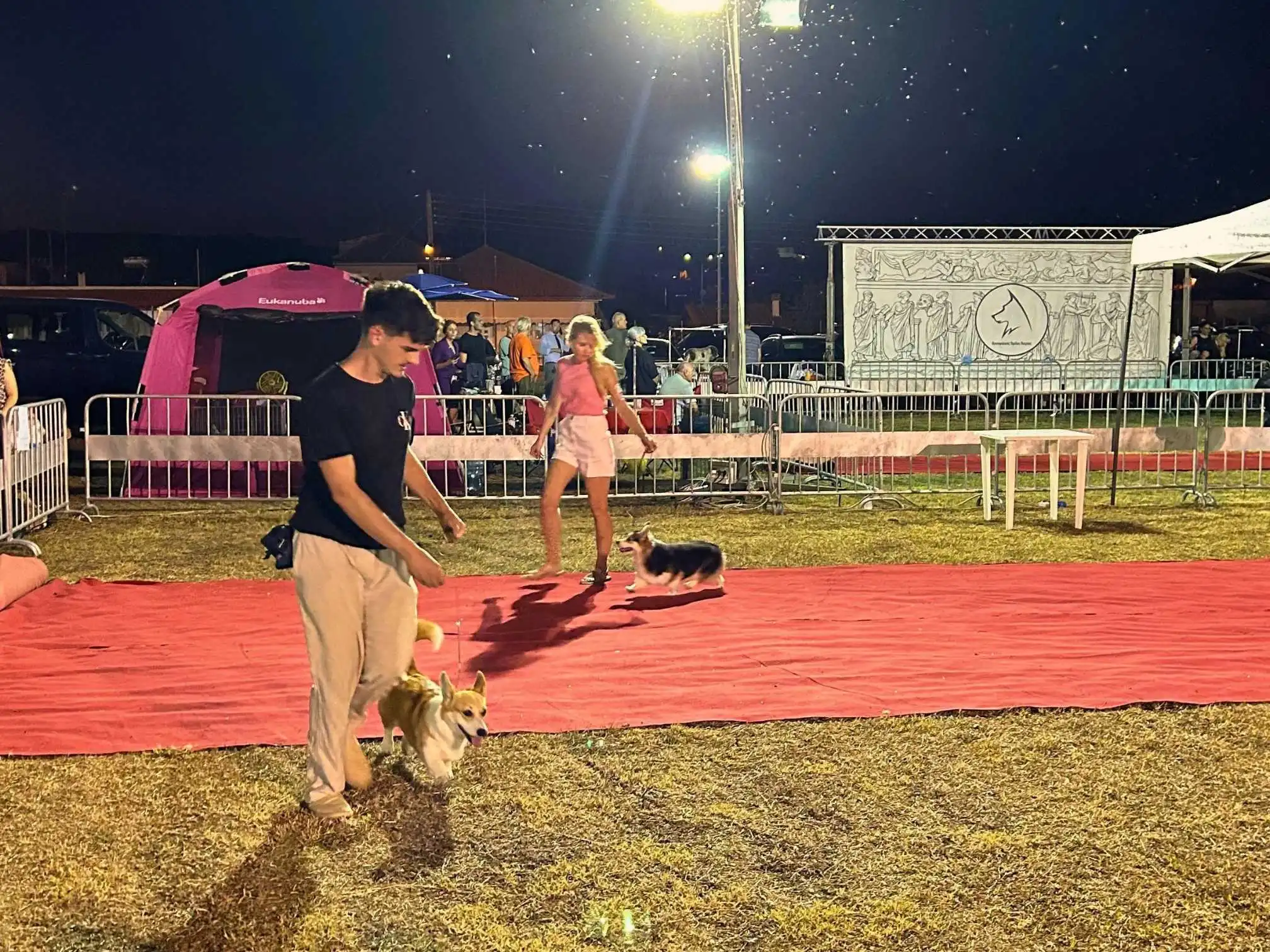
At one show, for example, we met the breeder of Coco's father in person and were together in the ring. At dog shows, you therefore do not just see other examples of the same breed. You sometimes meet relatives of your own dogs and the people behind other breeding lines.
Over time, you also realise that the show world is not nearly as large as it first appears.
We have now shown in five countries and still regularly meet familiar faces. A short conversation beside the ring turns into another meeting at the next show, and before long you know people across national borders.
The roles can also change surprisingly quickly. One day, someone may be judging your dog, and at another event you may meet the same person helping around the ring or taking on a completely different role within the show.
Working as a ring secretary and steward myself has made me appreciate this side of the show world even more. You spend an entire day together at the ring, see a large number of dogs, speak to people from different countries and may meet some of them again months later at a completely different show.
Experiences like these have become just as much a part of dog shows for me as CACs, CACIBs or championship titles.
You take the ribbons home with you. Many of the people and stories, however, keep crossing your path again and again.